You've studied the theory. But when the door closes and it's just you and the client, all that sits between you are the skills. If you find yourself asking, "Am I doing this right?" you are not alone. You're in the right place.
So many counselling students say that learning counselling skills and using them effectively is challenging. And there's a reason it feels that way.
Because of client confidentiality, students don't get to see qualified therapists demonstrating how to apply skills in real sessions. You are asked to learn something you can never see demonstrated in a real setting.
Think about that for a moment. You're learning one of the most complex interpersonal skills there is, and you've never been able to watch an experienced counsellor sit with a real client: how they respond when the client brings something unexpected, how they use silence, when they reflect and when they hold back. Not an actor. Not a classmate playing a role. A real person, bringing real material, in a real session.
It's no wonder so many are left feeling unsure.
Lack of confidence, from not knowing exactly what to do or how to apply techniques, can cause self-doubt and change the passion for helping others into uncertainty and anxiety.
This is a structural gap in how counselling training works. And it's the gap Skills Academy was built to fill.
When we surveyed over 720 counselling students and practitioners, the same feelings came up again and again.
Nearly one in three explicitly described imposter syndrome or self-doubt: a persistent, settled worry about whether they're good enough to sit with real clients.
If that sounds familiar, know this: the fact that you care enough to worry says something important about the kind of practitioner you already are.
And it doesn't have to stay that way. Hundreds of students have moved past that doubt, and the path they took starts with something simple: seeing real counselling skills in action for the first time.
Skills Academy works on a simple principle: you can't master a skill you've never seen done well, don't fully understand, and haven't practised in a supported environment. So we built the training around three things.
Watch real counselling sessions demonstrated by qualified therapists working with real clients. Not actors. Not scripted scenarios. Real sessions, recorded for training purposes: the thing your course structurally cannot provide because of confidentiality. Each session is followed by a full evaluation and discussion, so you see what happened and hear why.
Learn the theory and technique behind every core skill: active listening, silence, reflection, paraphrasing, summarising, challenge, and more. Each skill is explained in plain language: what it is, when to use it, why it works, and what else you could have done instead. You learn the what and you understand the why, so you can make confident decisions in the room.
Build your skills by practising with peers in a supportive community. With real people who understand where you are, structured guidance, and the chance to grow in a space where it's safe to be imperfect.
Most courses offer theory without practice. Most CPD offers content without community. Skills Academy gives you all three, because all three are needed to go from knowing to truly doing.
Right now, you might walk into a session carrying a knot of anxiety. You might rehearse the opening in your head, run through the skills you're supposed to use, and hope the client doesn't go somewhere you can't follow. Afterwards, you replay what went wrong.
Let's reframe that.
You walk in with quiet focus. The opening feels natural, not scripted. When the client shares something unexpected, you respond from understanding, not panic. The silences don't terrify you. You're present. You're doing the work you trained to do.
After the session, you reflect with curiosity. You notice what you did well and what you'd do differently. It's professional development, not evidence of inadequacy.
This is what it feels like to trust yourself. To trust that what you know is enough for the person sitting in front of you.
That shift, from "I hope I'm good enough" to "I know I can do this," is what Skills Academy is designed to help you make.
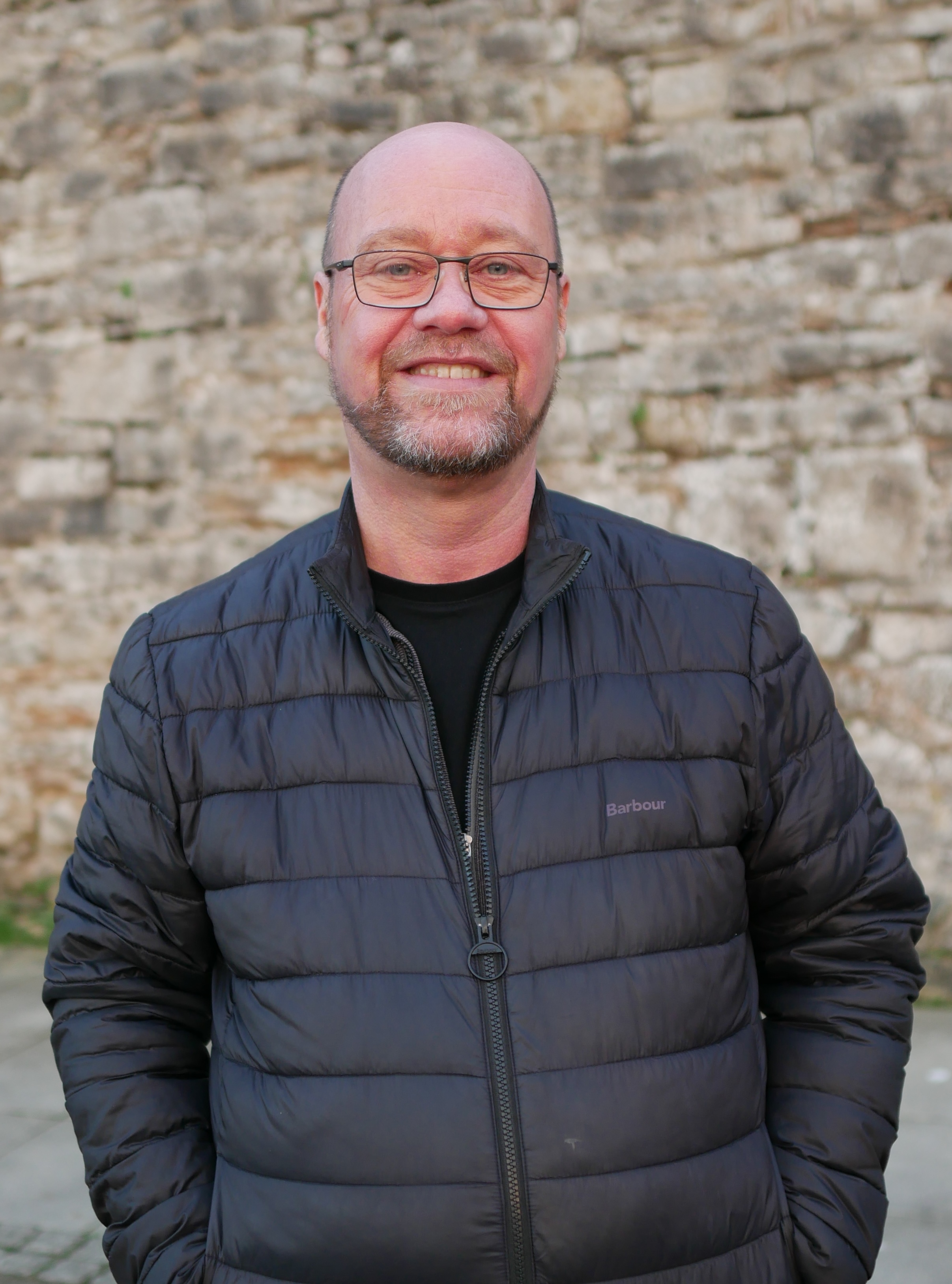
I'm a qualified counsellor, clinical supervisor, counselling tutor, and the author of Basic Counselling Skills: A Student Guide, which has sold thousands of copies around the world and is recommended reading in many formal counselling training centres and institutions. Through Counselling Tutor, I've had the privilege of teaching and supporting thousands of counsellors across the UK and internationally.
But I want to tell you something more personal than credentials.
I know the doubt that comes when you're sitting with a client and the theory in your head doesn't translate into words. I know the late-night questions that won't switch off: "Did I say the wrong thing?" "Am I enough?"
When I started building Skills Academy, I looked at what was already out there in terms of skills demonstrations. I found the Gloria tapes on YouTube, and apart from that, almost everything I could find was staged. Staging is important, but seeing real practice differs greatly from a staged environment.
I recognised there was a need. So I contacted a peer and together we worked for weeks on how we could use real material yet stay safe and respect confidentiality. We found a way. The result is in the Skills Academy: six full sessions and six evaluations where we meet as peers, not as client and counsellor, and evaluate the effectiveness of the skills used. The learning for us both was immense, and that learning is now available to you.
The good news is, I've helped thousands of students feel confident with their counselling skills. And the best part is: I can show you what works.
Qualified practitioner"Increased my confidence tenfold. Best money I ever spent towards my career in counselling. My expectations have been exceeded."
Student counsellor"I felt grateful for the rare opportunity to watch a live counselling session, and for the analysis afterwards. So much can be learned from this."
Counselling trainee"I love viewing these skills practices as I feel I still have a great deal to learn. Watching others in the counsellor role relieves a bit of the fear I have of 'not being good enough', 'not knowing enough', 'not doing it right'."
Level 4 student"It gave me confidence and courage to start the triad work."
Skills Academy member"Having the format and guidance as to how to evaluate my recorded skills has grown my awareness, competence and confidence as a listener."
Skills Academy is for anyone navigating the gap between knowing the theory and trusting themselves to put it into practice.
You're on a Level 2, Level 3, diploma, degree, or Master's programme. You love the course, but you know there's a gap between what you're reading and what you can do in the room. You want to see real counselling in action, not just read about it.
The jump from triads to a real client feels enormous. You want to walk in feeling as prepared as you possibly can, ready to sit with whatever the client brings.
You're in practice. Your clients keep coming back. But you still carry a quiet uncertainty: "Am I doing this right? Could I be doing more?" You want to sharpen your skills and remind yourself what competent practice looks like.
You're a social worker, nurse, teacher, HR professional, or another helping professional who uses counselling skills daily. You want proper, structured training in the skills that underpin your work.
The skills covered: active listening, reflection, paraphrasing, summarising, silence, and challenge, are foundational across all modalities. Whether you're person-centred, integrative, CBT, or any other approach, these are the relational skills that underpin everything you do.
You're already on the right path. You care about doing this work well: that's clear, or you wouldn't be here. The question is whether you've been given the right support to trust what you already have.
See a real counselling session demonstrated and discussed: the thing your course can't show you because of confidentiality. No commitment. Just a chance to see what Skills Academy is about.
Watch a Free SessionReady to go further? Learn about the full training: what's included, how it works, and how to join.
Find Out MoreYes. The skills covered (active listening, reflection, paraphrasing, summarising, silence, challenge) are foundational across all therapeutic approaches. Whether you're person-centred, integrative, CBT, psychodynamic, or any other modality, these relational skills underpin everything you do with a client.
Not at all. Qualified practitioners are one of the core audiences. Skills can dull without intentional maintenance, and many qualified therapists report that watching the real session demonstrations reignites their confidence and sharpens skills they'd stopped thinking about. The evaluation blueprint is specifically designed for ongoing professional growth long after initial training is complete.
Skills Academy is entirely self-paced with lifetime access. There are no deadlines, no live classes to attend, and no coursework to submit. The lessons are broken into manageable sections. If you have fifteen minutes, you have enough time. It fits around your life, not the other way around.
Real. The counselling sessions in the training are with a real client bringing real material, not actors or scripted role-plays. This is what makes Skills Academy unique: because of client confidentiality, this is something your training course structurally cannot provide. Each session is followed by a full peer evaluation where the counsellor and a colleague discuss what worked, what didn't, and what can be learned.
Yes. Skills Academy is hosted on an online learning platform that works on any device with an internet connection: desktop, laptop, tablet, or phone. You can learn wherever and whenever suits you.
Yes. If the training isn't right for you, there is a full money-back guarantee. There is no risk in trying.
Absolutely. The training is designed to be accessible from Level 2 upwards. Every skill is explained in plain language before being demonstrated. Many students join specifically because they feel their course hasn't given them enough practical exposure, and that's exactly the gap this fills.
No. Skills Academy is a one-time purchase with lifetime access. You pay once and the training is yours: no recurring fees, no expiry date.